
What My Rhino Conservation Trip to Africa Taught Me About Vet Med, Purpose, and Perspective
May 27, 2025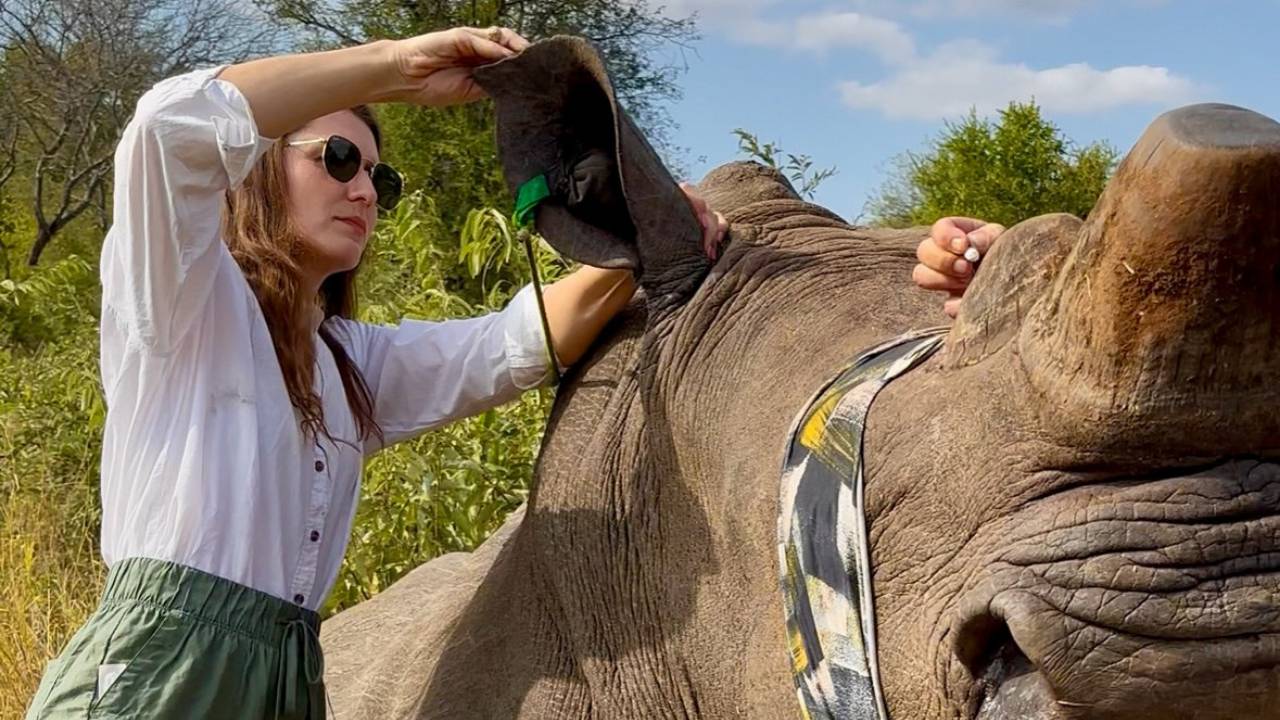
It’s been a few weeks since I got back, and I'm still trying to stabilize back into society, back into my job, and back into some version of routine. But this trip changed me. And like all meaningful experiences, I’ve been sitting with the question: How do I integrate what I’ve learned and use it to make my life and other vets’ lives more meaningful?
It started as a somewhat last-minute opportunity through my friend Chloe, the Jungle Doctor: veterinarians were needed for a rhino dehorning mission in South Africa. I, of course, said hell yes without knowing exactly what I was getting into, just trusting that it would be big. It was!

The Reality of Rhino Dehorning
I joined the Wildscapes veterinary team in Hoedspruit, South Africa to help dehorn rhinos: trimming their horns to deter poachers. It’s a heartbreaking reality: rhino horns are sold on the black market for upwards of $60,000 USD per kilogram each, often used as status symbols or “aphrodisiacs” despite being made of keratin—yep, the same human hair and fingernails.

Poachers don’t just cleanly take the horn. They kill the rhino, hacking through its skull to get access to the horn and sell it for money. The most effective method that’s proven to slow this slaughter is dehorning. It’s not glamorous. It’s not what anyone wants to do to these wild animals. But it’s making a difference.
Each weeklong mission costs around $50,000 USD and involves:
-
A fixed-wing plane to spot rhinos
-
A helicopter with a vet trained to dart and immobilize them
-
Multiple veterinary-staffed trucks on the ground
-
Potent immobilizing drugs (many times stronger than fentanyl)
-
20+ people working in sync, across rugged terrain (like, really rugged)

A Day in the Bush Looked Like This:
-
Wake up at 5 a.m.
-
Teams meet by 6 a.m. to prep trucks and gear
-
The plane scouts rhinos across massive reserves
-
Once located, the helicopter swoops in and the vet darts them from above
-
Ground teams race in, and the lead vet makes first contact
-
A blindfold is placed gently over the rhino’s eyes to reduce stimulation
-
I position massive bodies carefully, place IV catheters, give oxygen, microchip, trim the horn, and mark them with spray paint so we don’t dart the same rhino twice
-
The sedative is reversed, the team clears the area, and we watch from a distance until the rhino rises safely and trots off.

A Few Rules:
-
Don’t touch the dart site. The drugs can be lethal to humans.
-
Stay alert. You’re in the African bush with other wild, deadly animals, from scorpions to lions to elephants.
-
Never be out of the truck when a rhino is awake.
-
Plan time for rest and relaxation. I took a few days to eat healthy, exercise, and have a spa day to recover. Shout out to my friends at Kateka Lodge for giving me the restoration I needed. #selfcare


The Experience: Dusty, Gritty, and Alive
The work is hard. Physically and emotionally. Rhinos weigh over 2,000 pounds. Moving them is no joke. The dust and mud cover you. Watch out for giant ticks that live on them. The adrenaline is real. I’ll laugh one minute and feel like crying the next.
And yet… it’s magic.
The helicopter is buzzing above. Trucks fly down dirt roads. I sprint toward a living, breathing dinosaur (close enough) and feel the thunder of its breath under my hand. I play frisbee and eat granola bars between rhino sightings. I feel connected to something primal, natural, and pure.
It reminded me: not every vet job looks like a clean exam room and an iPad.
Some vets live in safari parks and nature reserves. They’re on call, working long hours for limited pay. Their offices are the outdoors. Their days are filled with unpredictability versus appointments. No job is perfect. And even the “cool” ones have hidden costs.
What I Took With Me
This trip gave me perspective. I came home grateful for air conditioning, clean clothes, paid time off, and clients who adore their pets. But I also came back clearer about what matters.
Wildlife vets aren’t optimizing for higher ACTs or 15-minute appointments or perfect SOAP notes.
They’re measuring success in lives saved.
They still face heartbreaking cases and hard calls. They still second-guess decisions and get frustrated with limitations. But they’re in it for the mission, and the mission is urgent.
At the end of the day, I’m in this profession to help animals.
And if I’m lucky, they help me too.
They ground me. They remind me of my why. They bring me back to myself.
Feeling Stuck? Try This:
If you’re in a season of doubt, burnout, or boredom, maybe it’s time to step outside. Literally and figuratively.
Get into nature. Try something new. Use your skills in a totally different way. Volunteer.
Vet med has so many paths. Don’t let one version define you.
And if you’re craving an experience like this, something that cracks you open and reconnects you to your purpose, drop your email here to be the first to know when The Evolved Vets Retreats launch.
Hear all about my experience in episode 9 of my podcast!